Let's Talk
 Hydraulic Adaptor Standards Explained
Hydraulic adaptor standards define thread forms, sealing methods, dimensions, and pressure capability. Selecting the correct standard for the job ensures compatibility, reduces leaks, and improves system reliability.
We’ve put together a concise breakdown of common threads and their respective international standards below, but here’s the general gist:
- JIC offers simplicity and broad compatibility
- ORFS prioritises leak-free performance under pressure and vibration
- BSP & NPT are widely used but require careful identification
- Metric DIN (L/S) provides structured pressure ratings and durability
- Code Flanges deliver the highest reliability for large, high-pressure applications
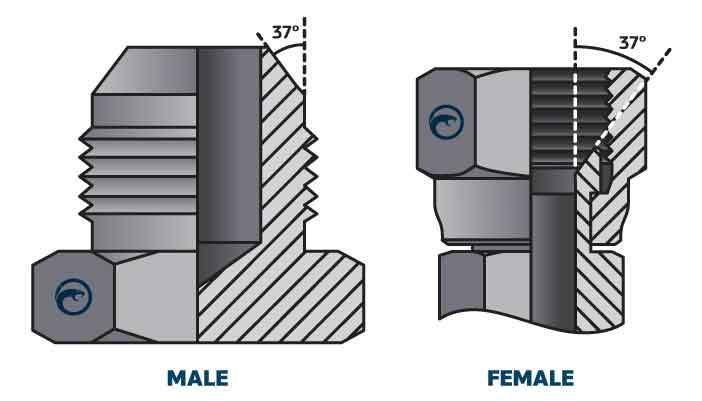
JIC (37° Flare)
Standards:
- SAE J514
- ISO 8434-2
Defined by:
- 37° flare geometry
- UNF (Unified Fine) threads
- Dimensions and tolerances
Seal type:
- Metal-to-metal flare
Customer impact:
- Widely available and interchangeable
- Easy to assemble
- Less resistant to vibration compared to ORFS
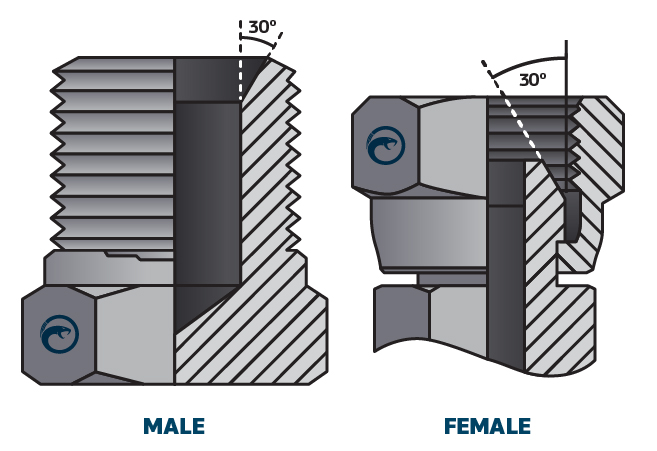
NPT (National Pipe Thread)
Standards:
- ASME B1.20.1
- SAE J476
Defined by:
- 60° thread form
- Tapered thread geometry
- Thread dimensions and tolerances
Seal type:
- Thread interference (often with thread sealant or tape)
Customer impact:
- Widely used in North America and some imported equipment
- Simple and cost-effective
- Requires sealant for reliable sealing
- Not interchangeable with BSPT despite similar appearance
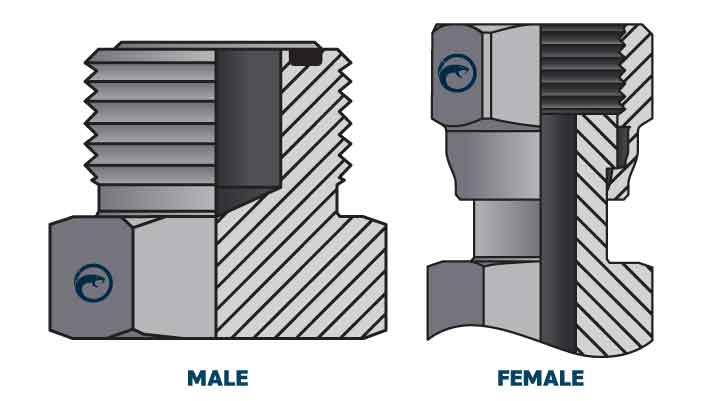
ORFS (O-Ring Face Seal)
Standards:
- SAE J1453
- ISO 8434-3
Defined by:
- Flat sealing face
- O-ring groove and thread dimensions
- UNF thread form
Seal type:
- Elastomeric O-ring
Customer impact:
- High leak resistance
- Suitable for high pressure and vibration
- Higher cost, O-ring condition critical to performance
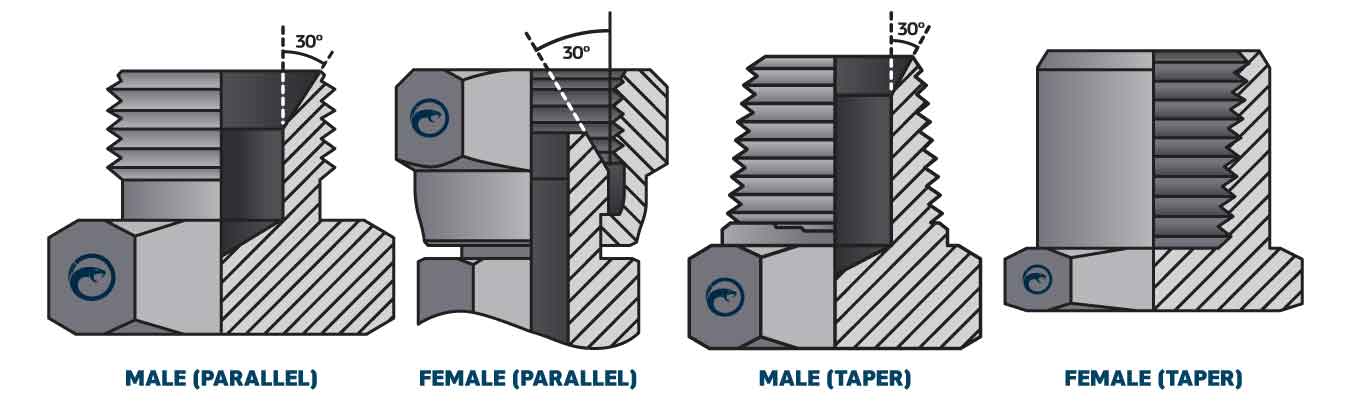
BSP (British Standard Pipe)
Standards:
- ISO 228-1
- ISO 7-1
- BS 5200
Defined by:
- 55° thread form
- Parallel vs tapered threads
- Thread dimensions
Seal type:
- BSPP: bonded seal/O-ring/seat
- BSPT: taper thread interference (often with thread sealant or tape)
Customer impact:
- Very common globally
- Must correctly identify BSPP vs BSPT
- Not interchangeable with NPT
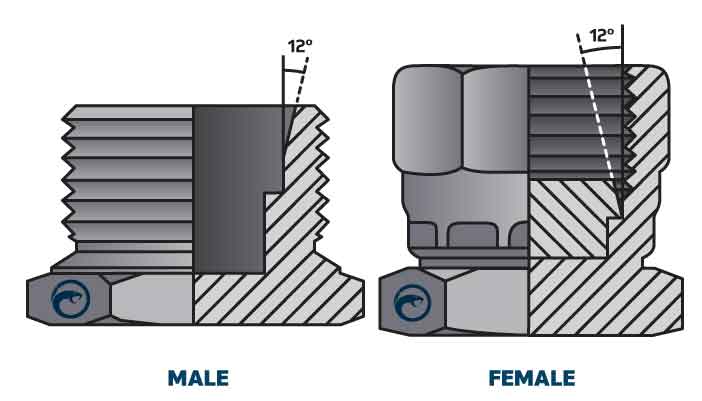
Metric DIN (L&S Series)
Standards:
- DIN 2353
- ISO 8434-1
- ISO 8434-4
Defined by:
- Metric threads and the tube OD (outer diameter)
- 24° cone geometry
- Pressure classes: L (light), S (heavy)
Seal type:
- Compression (cutting ring) or O-ring
Customer impact:
- Clear pressure rating (L vs S)
- Strong, vibration-resistant
- Requires correct assembly process
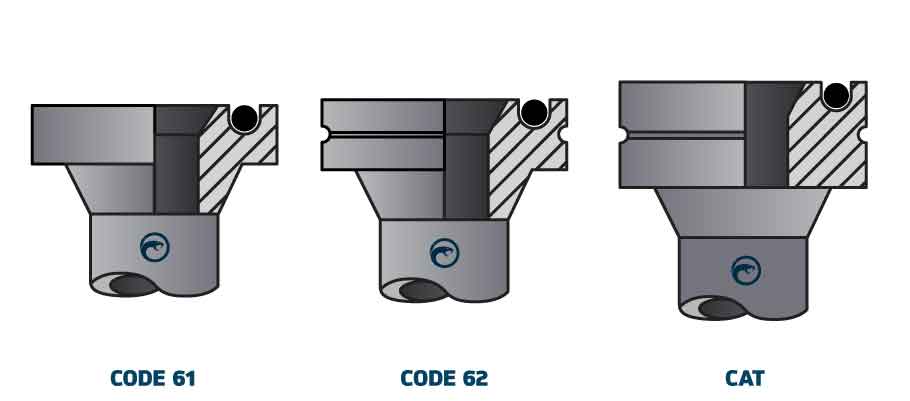
Code Flanges (SAE)
Standards:
- SAE J518
- ISO 6162
- ISO 6164
Defined by:
- Flange dimensions and bolt patterns
- O-ring groove
- Pressure classes (Code 61/Code 62)
Seal type:
- O-ring face seal
Customer impact:
- Best for high pressure and large bore
- Reliable, low leak risk
- Requires more space and hardware
As you can see, choosing the correct thread is less about preference and more about application. Matching the fitting type to the system’s pressure, environment, and service conditions will directly impact safety, reliability, and long-term cost.
Incorrect selection or misidentification is a common cause of failure, so understanding these standards is a critical part of system performance and risk management. If you’re ever in doubt, reach out to our team and we’ll set you on the right path.
Contact us
Have a question? Let us know!